Building date: At least the 1840s.
Original use: Carriage Shop
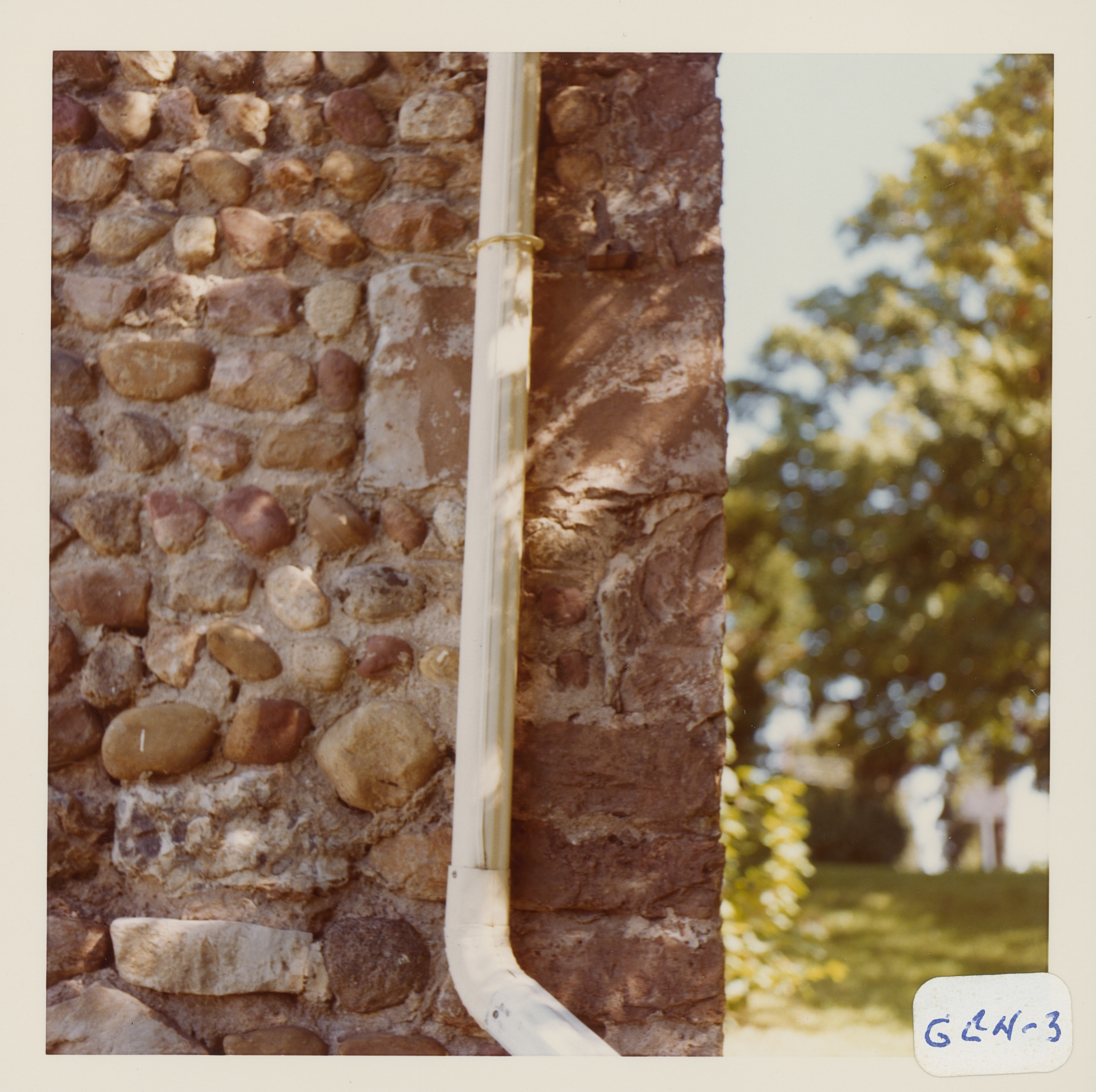
Corner structures: Variable, Red sandstone
Mortar application and content: Vertical, slight embellishment. Vertical pyramids
Types and uses of stones: Irregular rough
Types and choice of windows:
Structures with similar masonry details:
Masons who worked on building:
Unique features:
Map views courtesy Google Maps. Address is Google Earth confirmed; 42°52'35.74"N 77°00'28.80"W. Current owner of record, Cornell AgriTech, Cornell University, New York State Agricultural Experiment Station.
Town of Geneva and Ontario County Maps
This structure is part of the New York State Agricultural Experimental Station and is listed as building 4911, Stone Barn.
This is an old carriage house on the grounds of the New York State (Cornell University)Experimental Station at 4911 West North St., Geneva, N.Y. I was the first building used for agricultural purposes when the Station was established in 1880. The staff of seven Station scientists used it both as a research center and living quarters. Note the roughly dressed red sandstone quoins. It is currently used for storage. At some point the carriage entrance was changed into a regular entrance.
This former carriage house dates back to at least the 1840s. It was on the Nehemiah Denton farm that was purchased for use as the New York State Experiment Station in 1882. It was the first building on the campus and the most historically significant. The nearby Italianate villa known as the Nehamiah Denton house was built in 1854. It replaced an earlier structure. It became known as Entomology Hall and in 1950 became Parrott Hall in honor Dr. Percival Parrott, the station's first entomologist and later its director. Even though it's been on the National Register of Historic Places since 1970, it has been vacant since 1973. At that time the house was owned by the New York State Department of Parks and Historic Preservation that had plans to restore it as a museum. Some minor repairs were made. But it is now abandoned and is rapidly deteriorating. Thankfully the cobblestone structure is in excellent repair. See study done on Parrott Hall: https://ecommons.cornell.edu/bitstream/handle/1813/8292/PH%20Conservation%20Assessment.pdf?sequence=1&isAllowed=y. Richard Palmer blog.
- "Cobblestone Masonry", 1966, Carl Schmidt: Name reference, Geneva Experimental Station
- Page 95
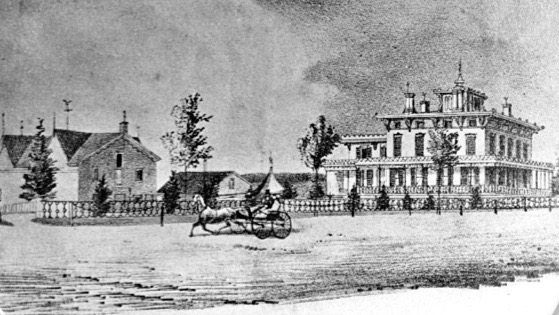 Denton House, Geneva.jpg ¹ The carriage house is in the background to the left of the Denton house. | 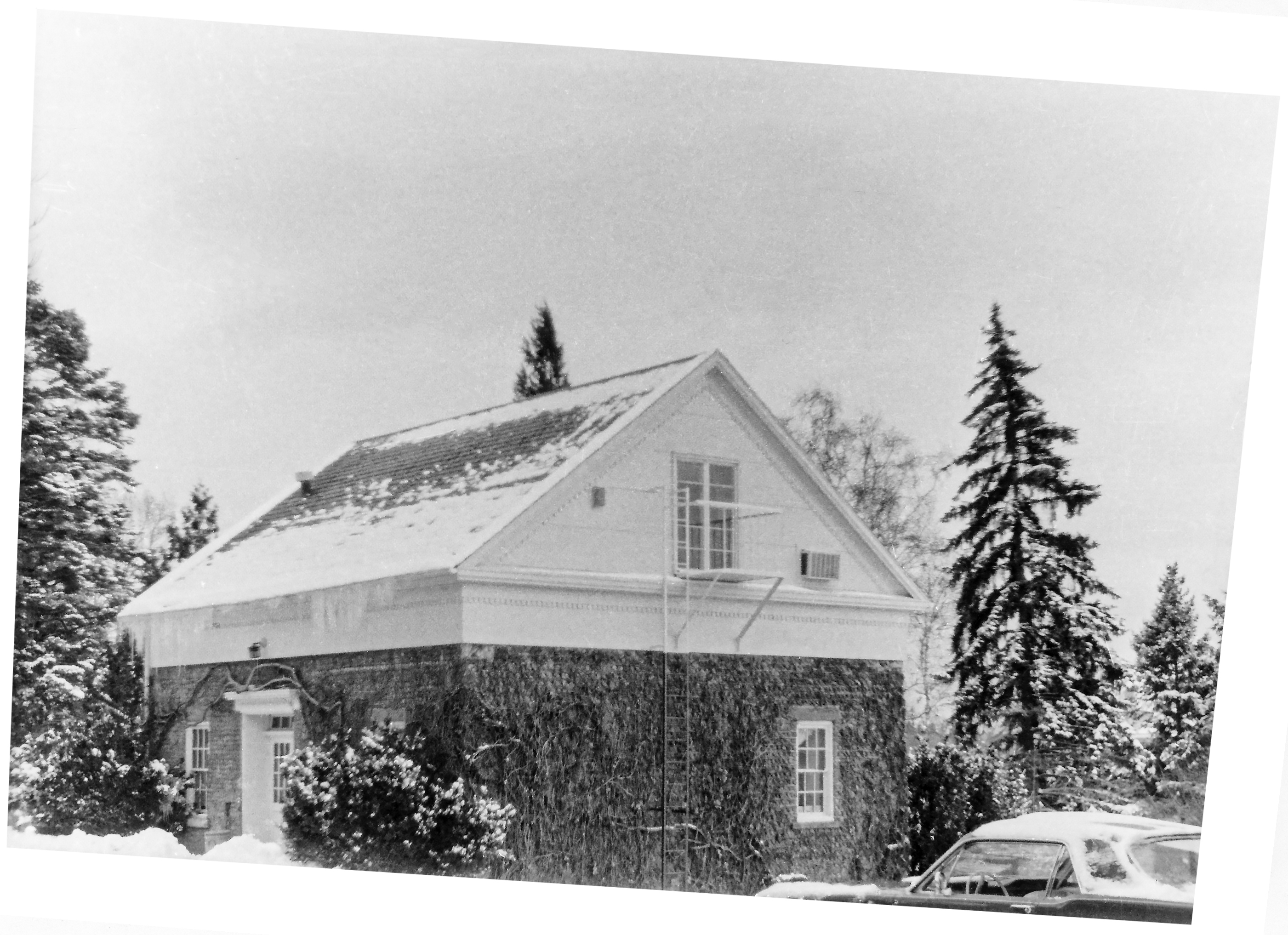 Gen-3 Buggy Shop 1.jpg ² 1970 | 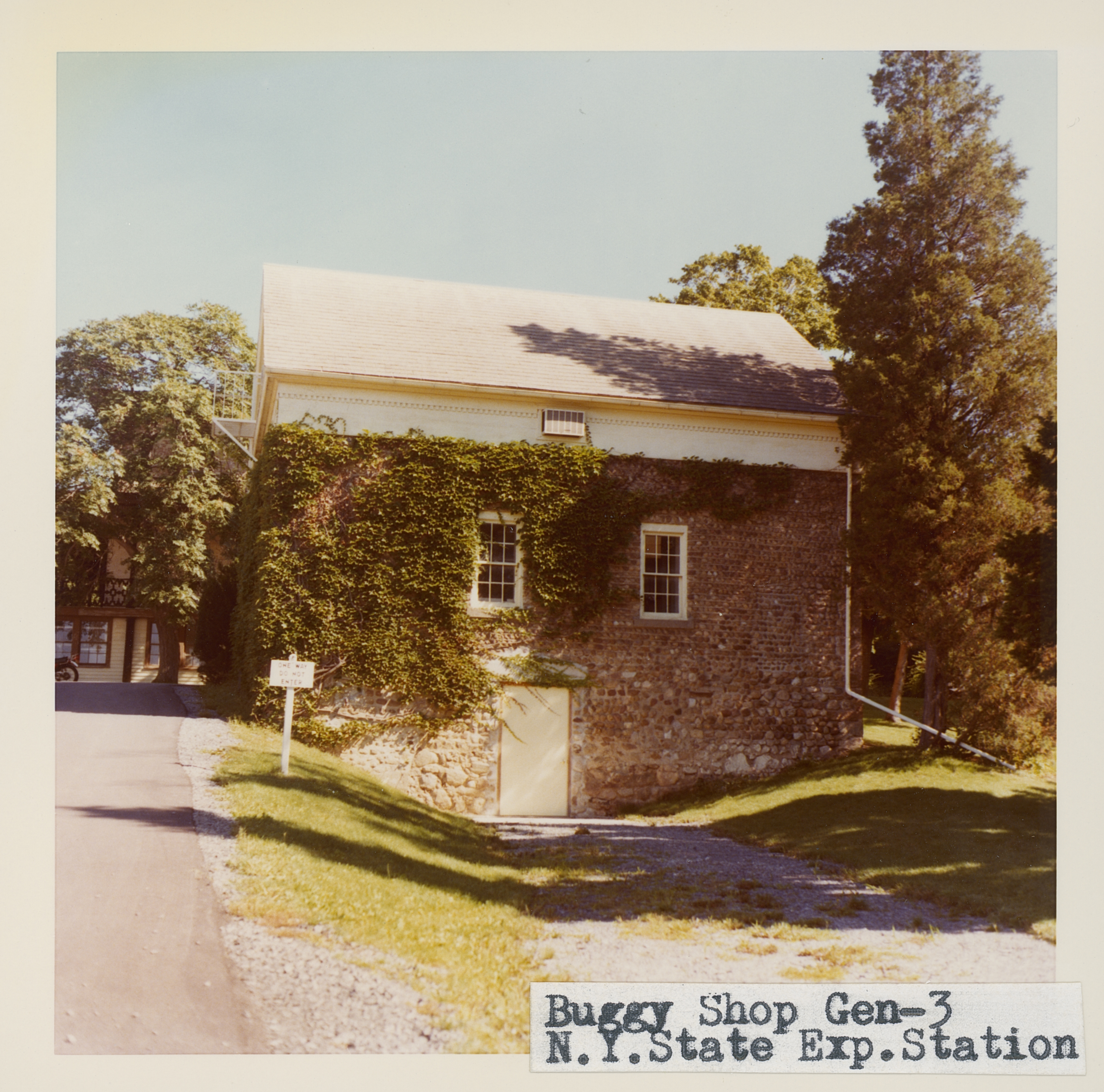 Gen_3_1.jpg | 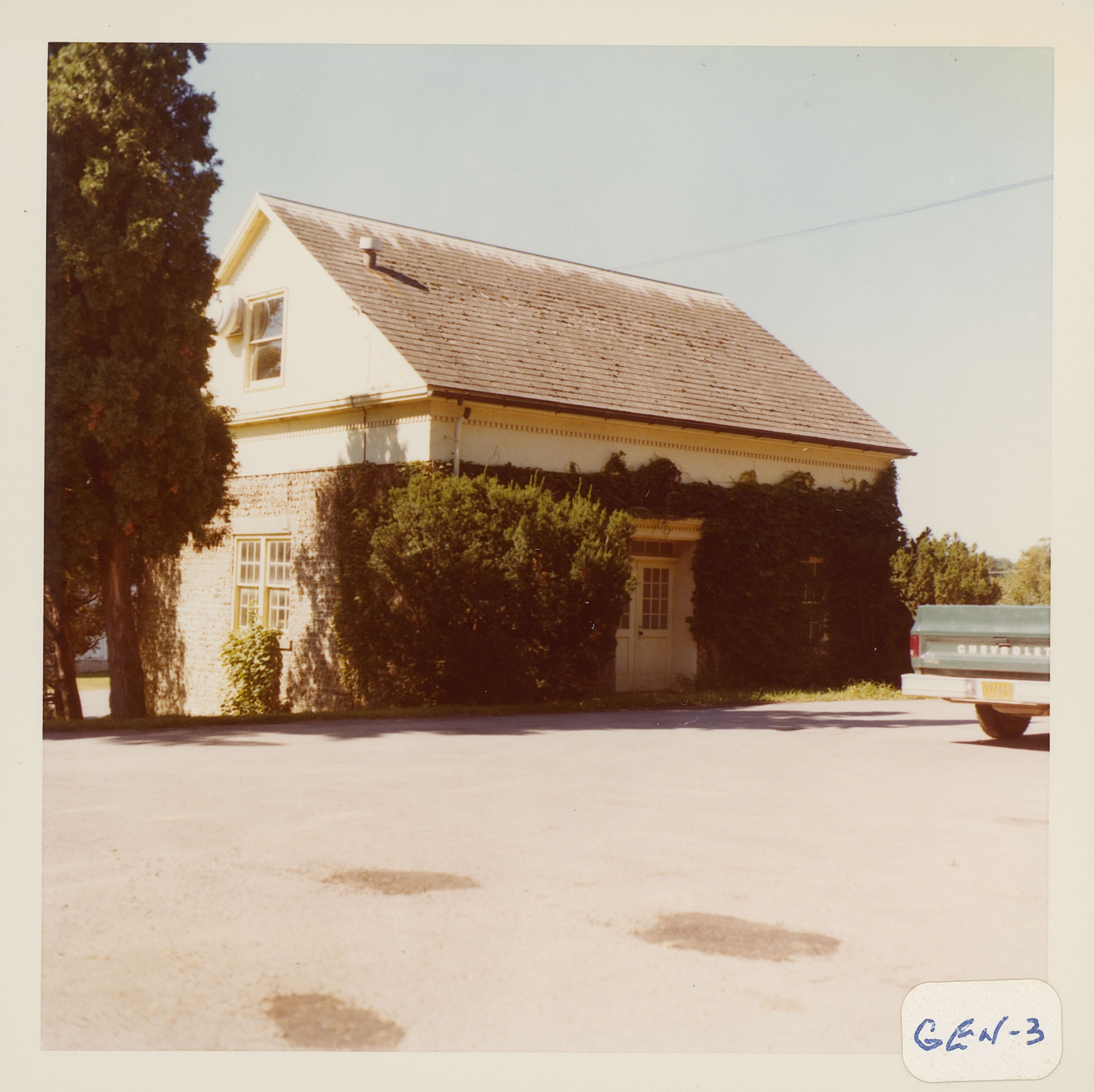 Gen_3_2.jpg |
 Gen_3_3.jpg | 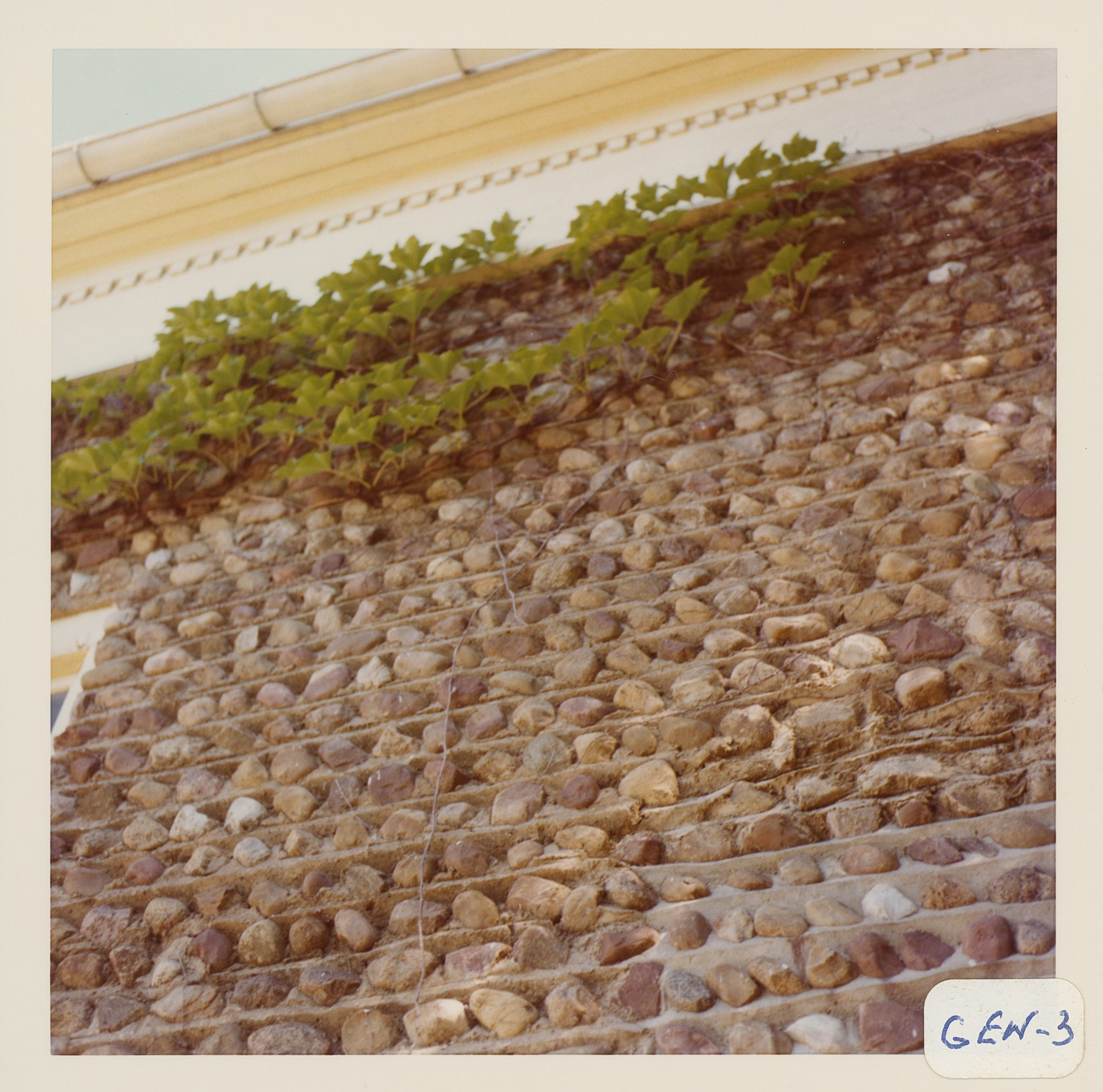 Gen_3_4.jpg | 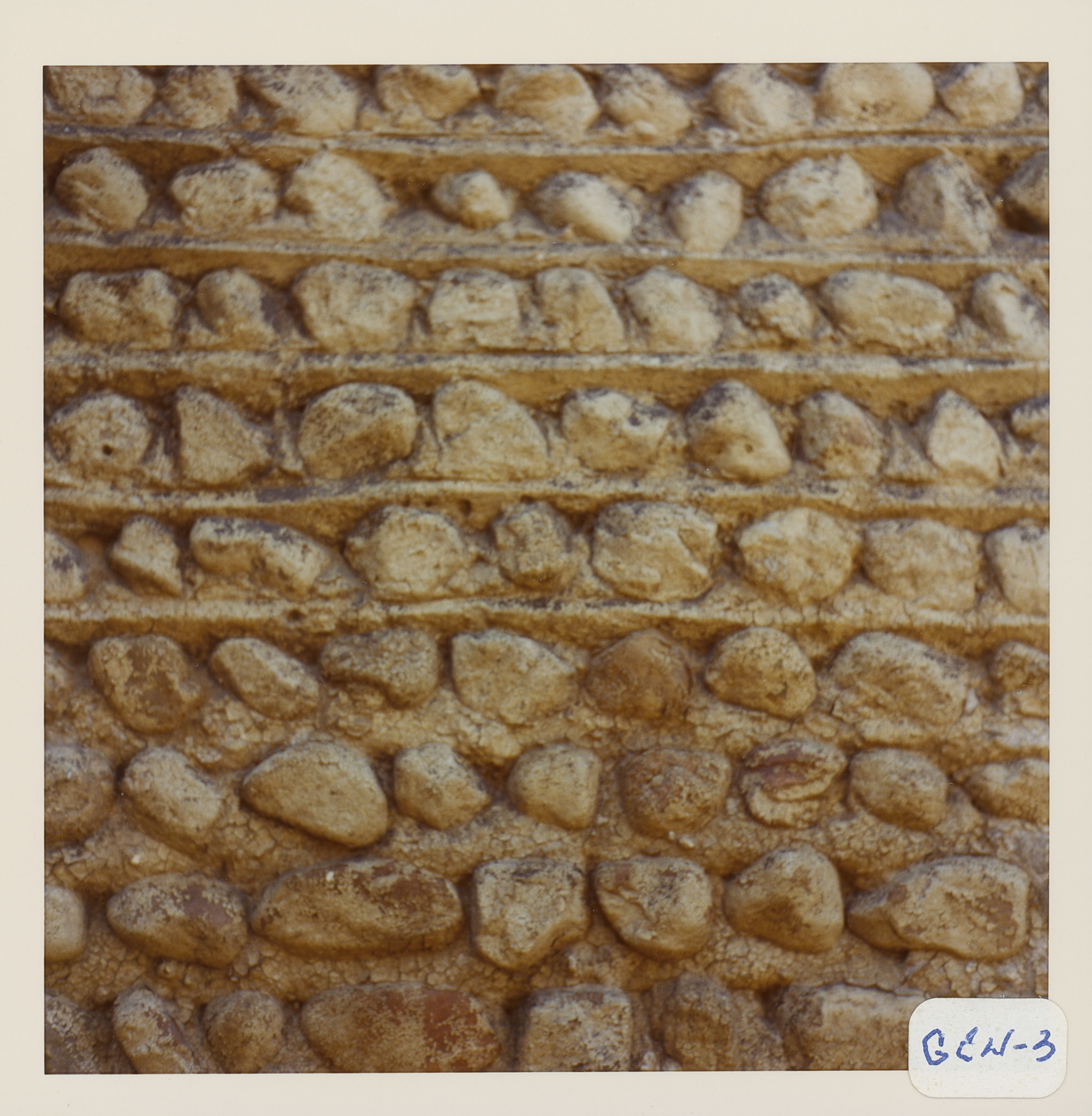 Gen_3_5.jpg | 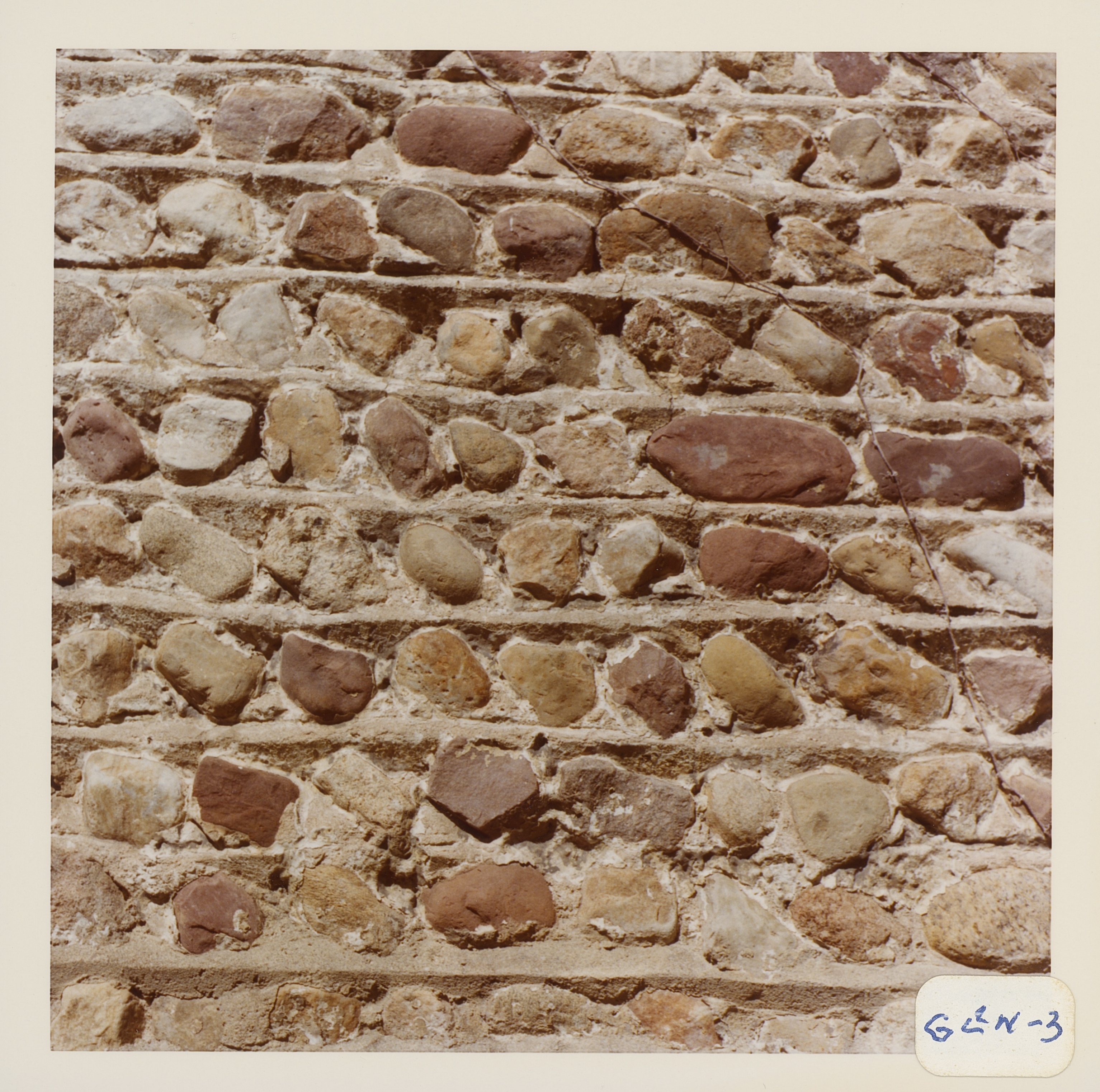 Gen_3_6.jpg |
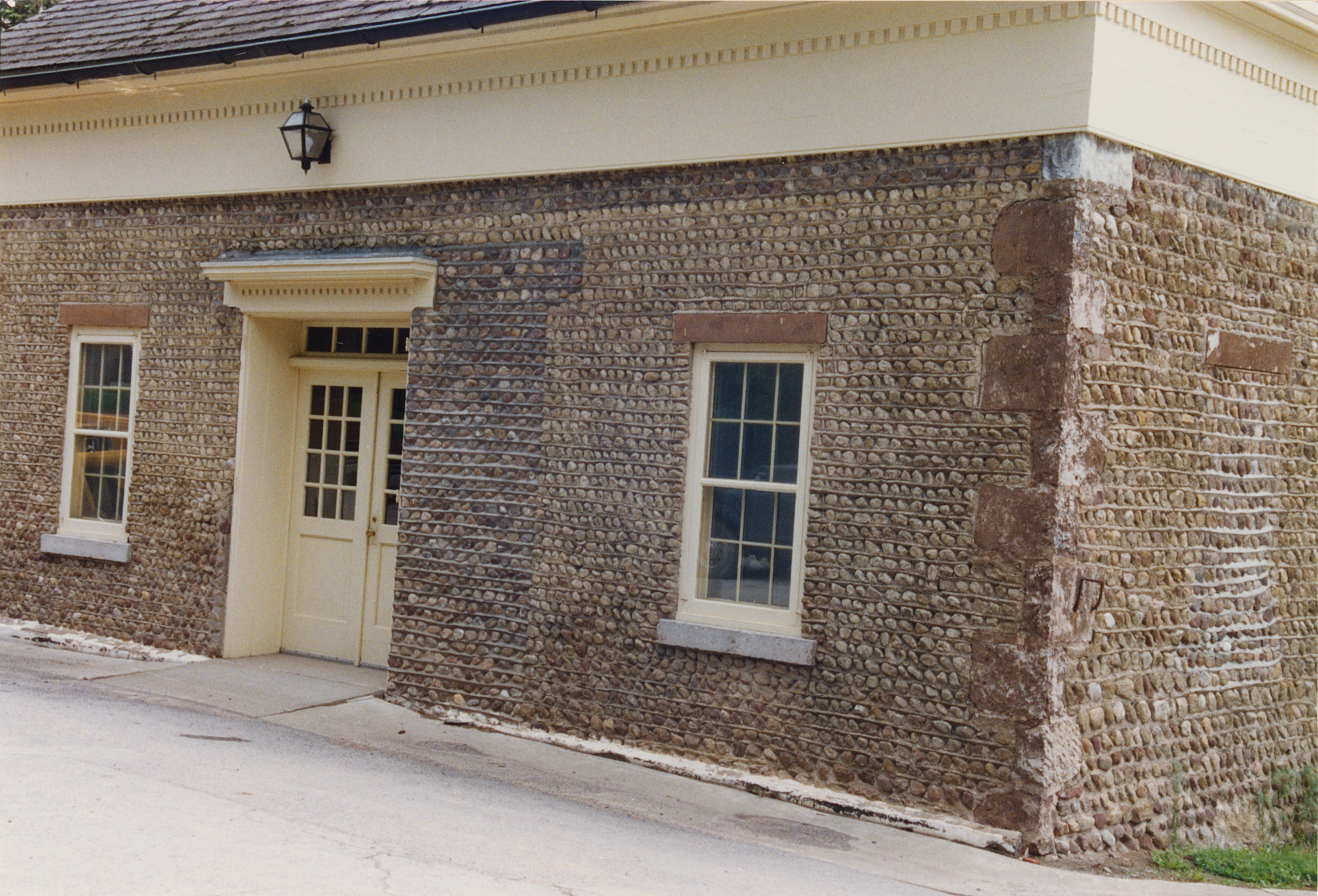 Gen-3 630 West North St Bldg 1.jpg ³ | 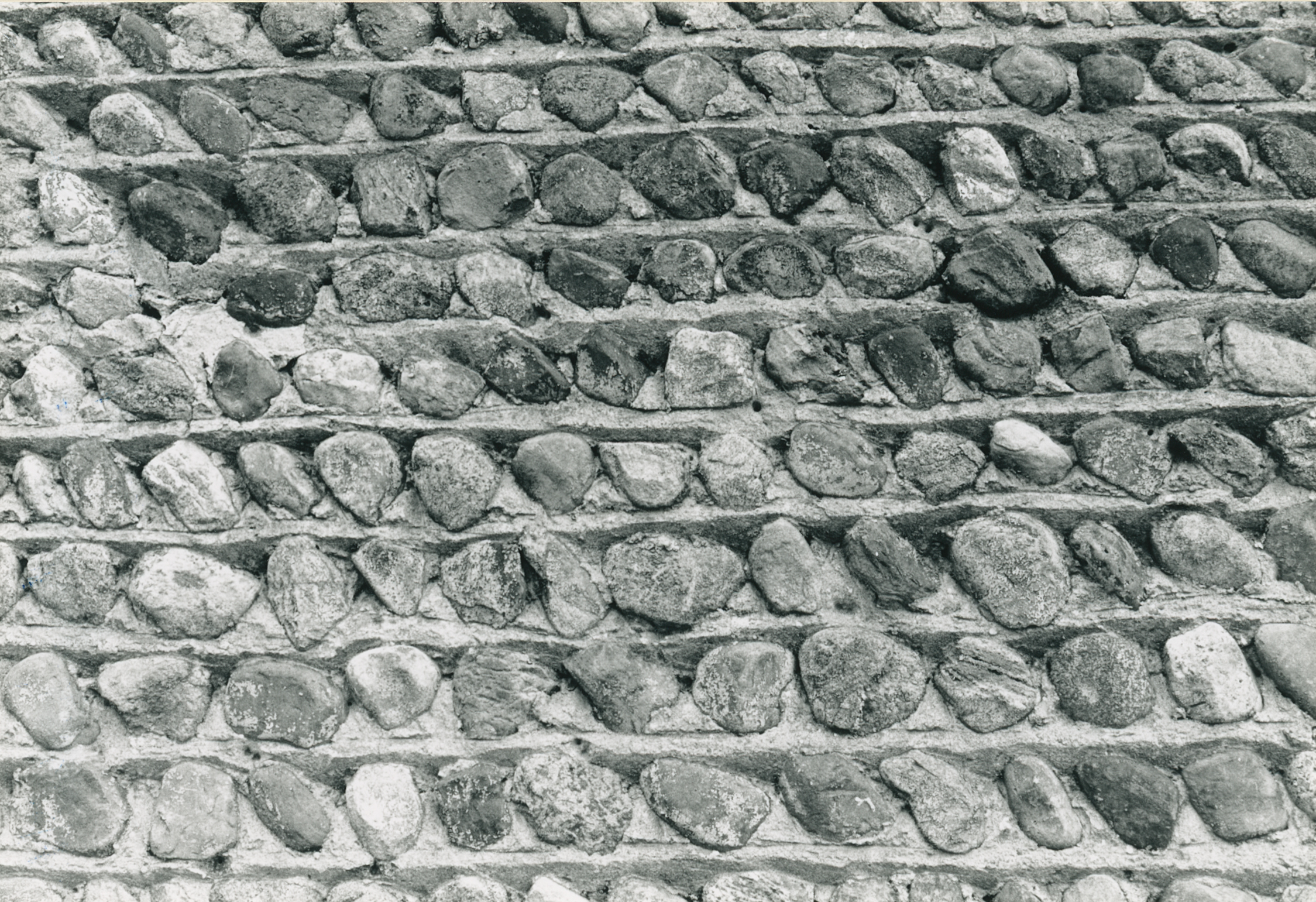 Gen-3 630 West North St Bldg 2.jpg ³ | 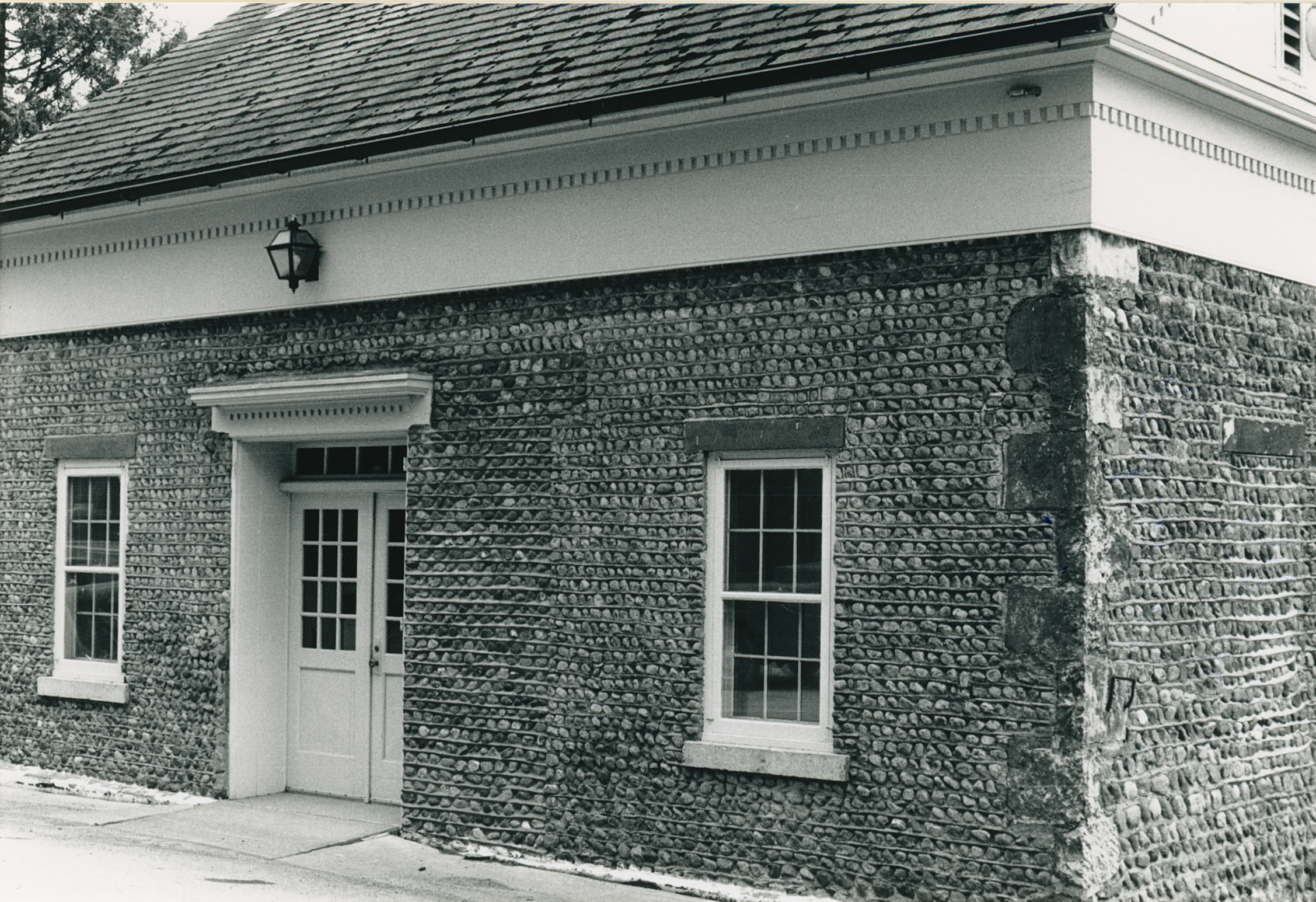 Gen-3 630 West North St Bldg 4911 3.jpg ³ | 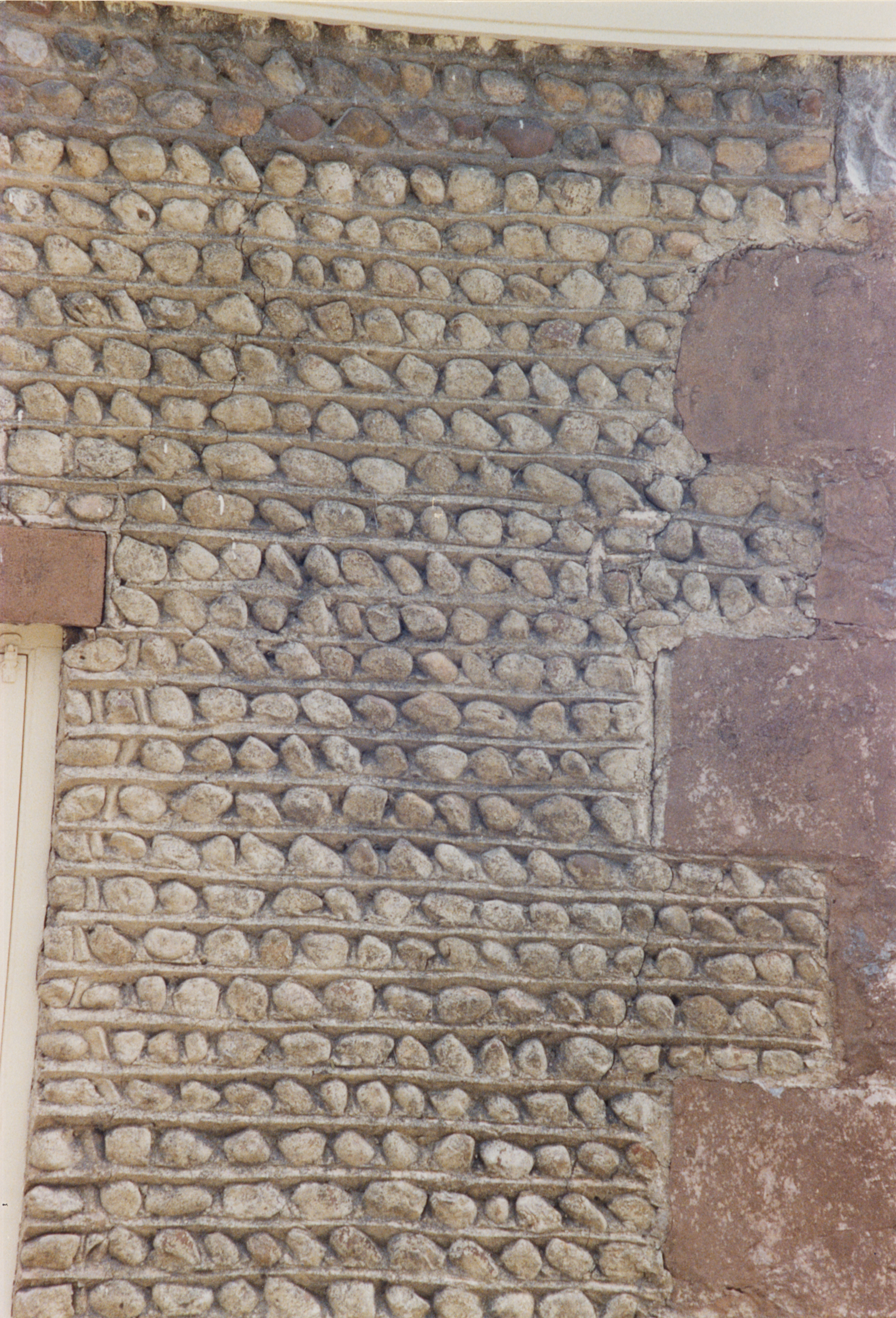 Gen-3 630 West North St Bldg 4911 4.jpg ³ |
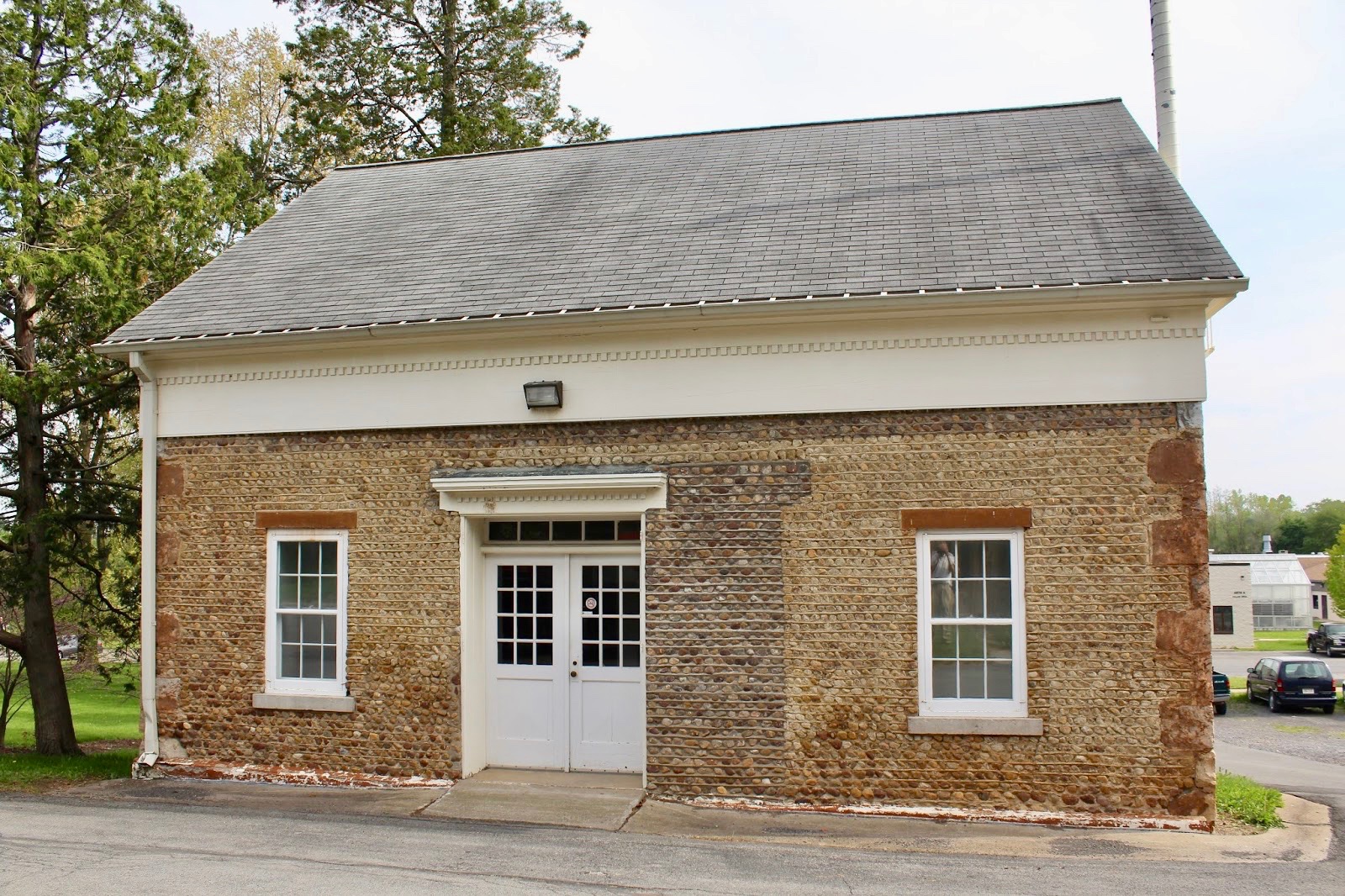 IMG_0746.jpg 4 | 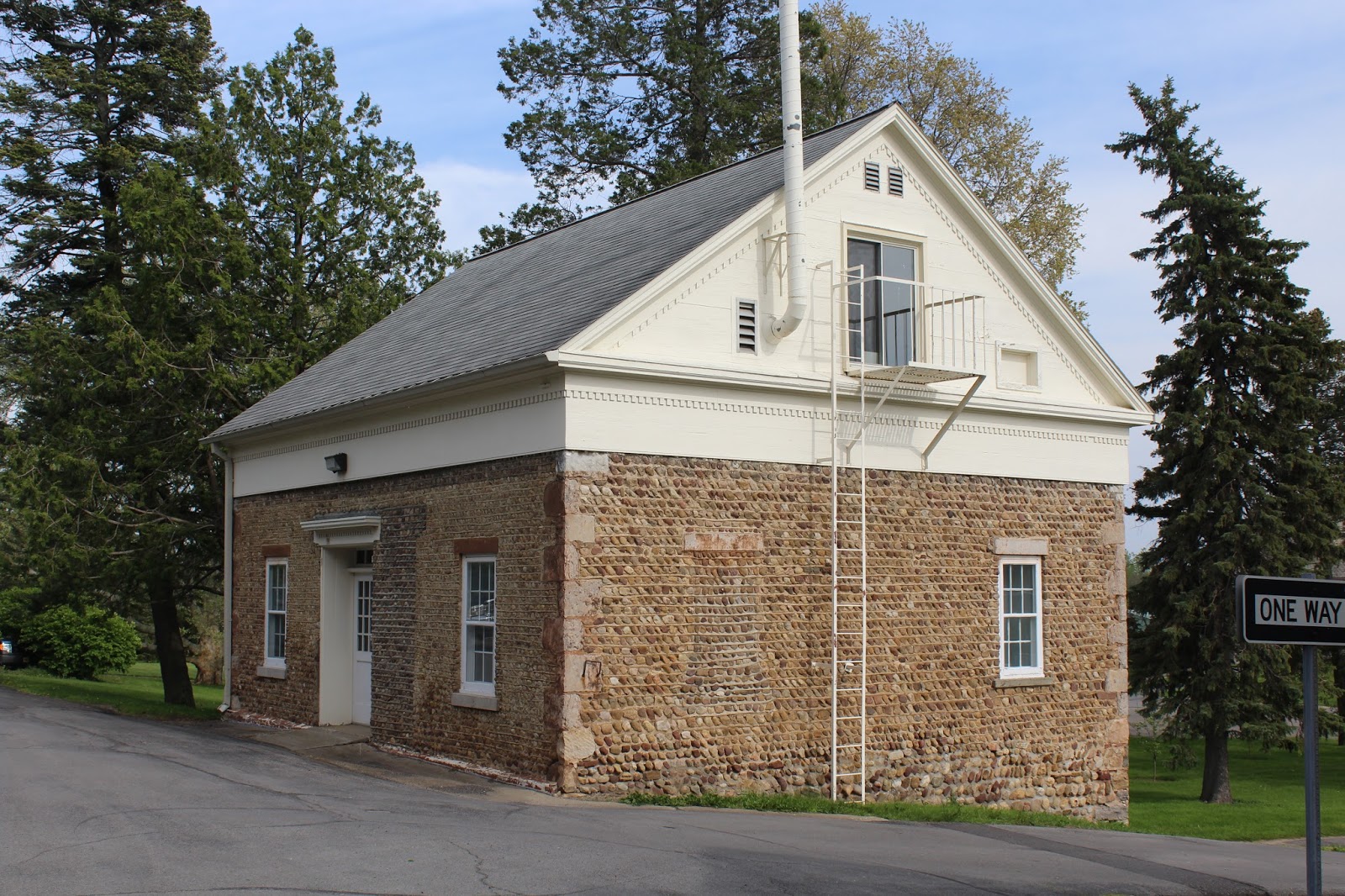 IMG_0744.jpg 4 | 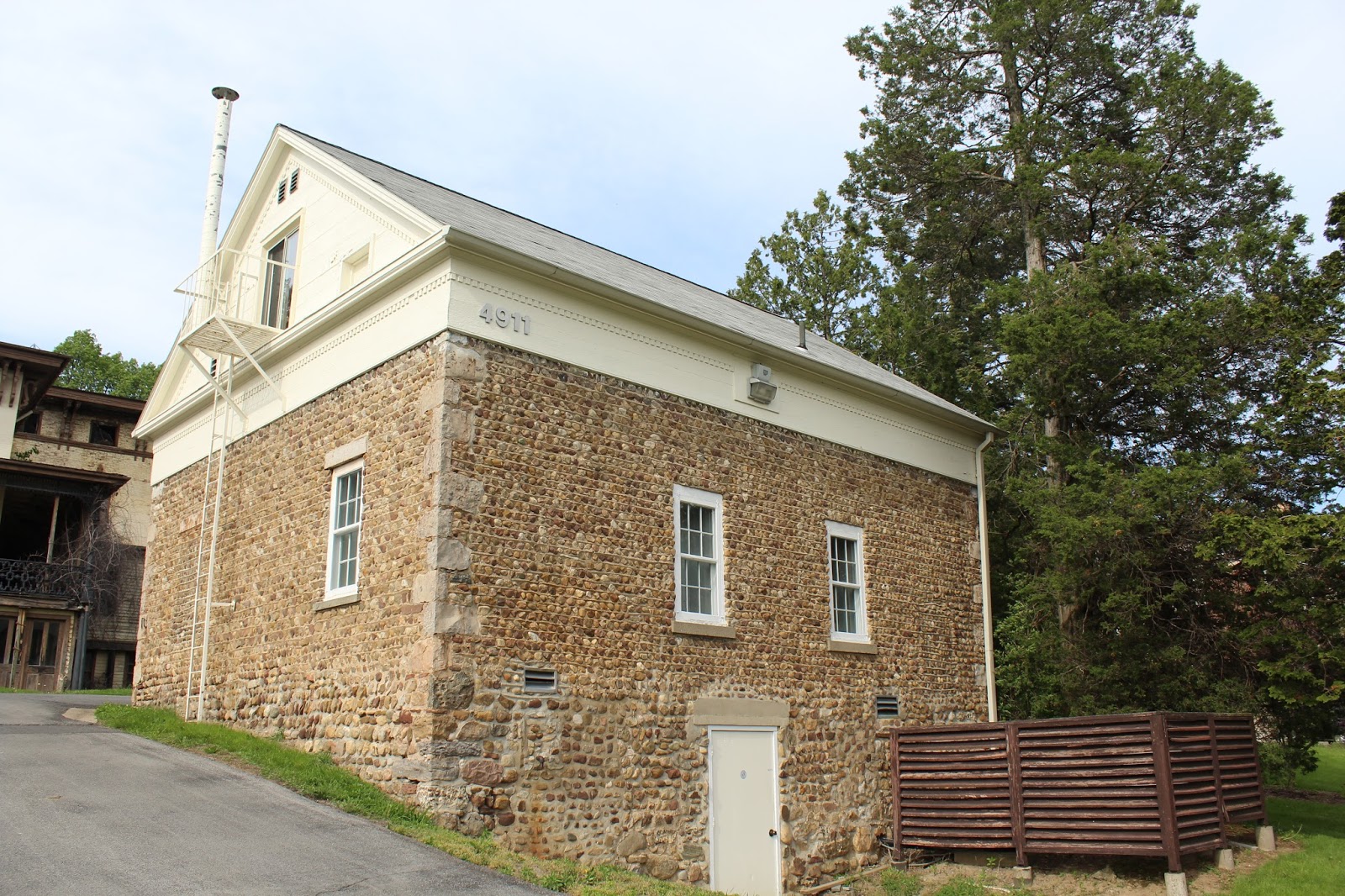 IMG_0745.jpg 4 |
¹ Image courtesy Richard Palmer. This illustration is from a large wall map, "Town of Seneca and Village of Geneva, Ontario County, N.Y., From Actual Surveys. Published by J.H. French, Philadelphia, 1856." The former barns and a glimpse of the cobblestone carriage house can be seen to the left of the house.
² Photograph by Clyde Maffin, Ontario County Historian 1968-81.
³ Photography courtesy Martin and Sheila Wolfish.
4 Photography courtesy Richard Palmer.
